

Riso

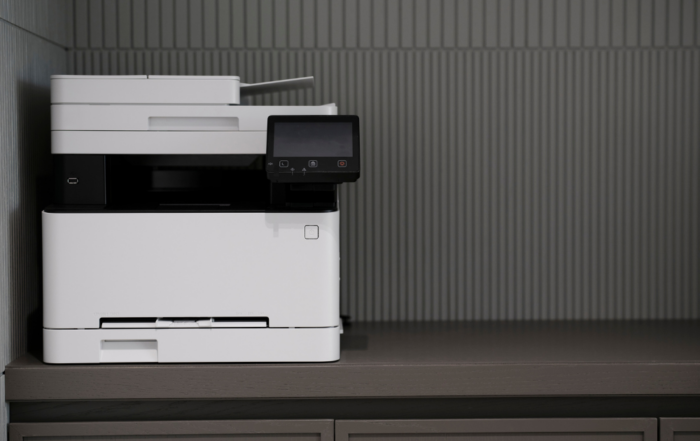
Power Consumption The Hidden Costs of Copiers and Printers

CaptureDid you know that office equipment is one of the fastest growing electricity uses in commercial buildings in North America? Office equipment consumes approximately 7% of commercial electricity or $1.8 billion in costs to businesses.

Although many organizations are adopting greener business practices, energy consumption due to office equipment and related energy systems, including air conditioning to displace the heat generated from such equipment, is expected to rise. Reducing the amount of this electricity has important environmental and economic benefits. By choosing energy-efficient equipment, purchasers can save a substantial amount on electricity costs, as much as 95% for products such as monitors and printers.

For organizations seeking to purchase printing equipment, understanding power consumption and the role it plays in the environment is critical to maintaining a green workplace—and can have a positive impact on the bottom line. Although many printer manufacturers’ are listening to buyers and beginning to launch products that use less energy, buyers need to understand how energy consumption works to be able to purchase a model that is best suited for their organizational needs and printing output volume.

This white paper will explain how to accurately read printer and copier specification labels so that potential users can calculate the energy consumption the organization will use. It will also provide tips on saving energy and other ways of going green in your business environment. continue reading...

Direct Marketing: Generating Five Leads for the Price of Two

Capture Produce equivalent campaign response rates for 62% less

In the business of direct marketing, achieving the highest response rates is the name of the game. Leading print-for-pay businesses that use inkjet technology to print direct marketing materials traditionally produced with toner or offset technologies report equivalent response rates and far higher profit margins, echoing the findings of a new INTERQUEST research study.

What are you doing with your direct mail?

Have you ever hung framed copies of your telephone bill, a bank statement or a direct marketing postcard on your wall? Do your customers demand photographic image quality on letters, envelopes, invoices, and direct mail? Why pay higher acquisition and running costs for electrophotographic (toner-based) digital printers designed to emulate offset print quality?

For printing and communication services companies with ambitious and cost-conscious customers, the advent of fast, flexible color inkjet printing technologies has created new opportunities and revenue streams, providing access to additional applications while opening profitable new markets. The focus remains squarely on ROI by maximizing the business returns of direct marketing and customer communications. Digital print providers and their customers are finding they can produce the majority of customer communications including demand generation and transpromo statements, invoices, and more, with inkjet, while delivering equivalent campaign response rates, for less than half the cost of toner-based printing processes. Despite assumptions to the contrary, today’s evidence shows that end recipients respond equally well to matte finish and glossy marketing pieces, opening low-cost, full-color variable data printing opportunities to print service providers and direct mail shops of all sizes. continue reading...

Transactional Printing Understanding the Opportunities and Alternatives

Capture1 Introduction

Color Transactional Printing

Transactional printing refers to the production of bills, statements, invoices, checks, insurance policies, and other informational documents with content unique to each recipient. Although traditionally produced on black and white equipment, recent innovations in high-speed color printing have introduced new approaches for producing transactional content. Currently we find three primary uses of color in transactional applications:

High-speed inkjet is often used to eliminate pre-printed forms by producing logos and other color elements on the fly; in most cases the variable data is printed in black and white in the same pass on the press

Full-color toner-based equipment is often used to produce data-driven charts and graphs to spice up transactional documents for a select subset of customers

Single-pass, full-color variable content may also be used to promote a product or service on the document; this is often called “transpromo,” and ties marketing to transactional content

The transactional printing market in North America has peaked in terms of the annual number of impressions produced on digital equipment. The total number of production printers in the market is also slightly declining as many commercial and in-house operations consolidate and run more impressions on fewer, but faster machines.

Overall, the total number of transactional impressions produced on digital production equipment will decline by about one percent per year over the next three to five years. Even so, this decline is far less than many had feared in the face of competition from electronic media.

In the future, different categories of transactional output will exhibit markedly different rates of growth, reflecting a growing trend toward full-color printing. Monochrome output will decrease by about one percent per year, while highlight color printing increases slightly in volume, and full color grows by 38% per year. continue reading...

Short-Run Book Production: Opportunities for Digital Printing

Cap Background

The Digital Book and Manual Printing Opportunity: Market Analysis and Forecast (INTERQUEST, 2005) was based on an in-depth survey of leading North American and European book and manual printers and publishers. Its purpose was to review and assess the overall state of the market for digital book and manual printing and examine related technology developments. The study identified three key segments where digital printing was having the greatest impact: trade, education, and professional books. Over the past few years, with advances in color technology, a fourth segment (photo books) has emerged as a high-growth segment for digital printing. This study focuses on these, the largest and fastest growing sectors of the book market for digital printing.

Currently most front-list titles are still produced conventionally due to the run lengths involved. The economics of digital printing instead steer the choice in the direction of back-list titles and other instances which clearly call for on-demand or short-run production. Digital printing is, however, finding relevancy for some front-list books—usually for relatively low-volume titles which are not subject to excessive price constraints, which describes many of the books we examine in this study.

Methodology

In addressing these and other questions, the study focuses on digital book printing for trade, education, professional, and photo books, including developing trends and issues that are influencing the adoption and use of digital printing systems. The study is based on in-depth interviews with 60 printers and publishers conducted in 2007. continue reading...

Variable Data Printing Understanding the Opportunities and Alternatives

Capture3 The Marketing Challenge

Marketing professionals today are faced with tremendous pressure to validate their marketing performance. According to the CMO Council, publishers of “Marketing Outlook 2007,” marketers consider measurement, improved efficiencies, and customer knowledge to be their top challenges. Over the past few years these challenges have impacted the tenure of many Chief Marketing Officers (CMO) in both B-to-B and B-to-C environments. According to a study by executive search firm Spencer Stuart, the average tenure for a CMO was down to 23 months in 2006.

The role of the CMO has also changed over the years. Their influence on an organization, as well as the expectations by other executives, is very high. The Spencer Stuart study found that nearly three-quarters of CEOs and board members consider the marketing organization “highly influential and strategic” in the enterprise, but nearly two-thirds say that their top marketers don’t provide adequate ROI with which to gauge marketing’s true performance. The report was based on interviews with more than 1,200 senior marketers, 300 CEOs and board members, and 35 corporate recruiters.

To be successful, marketing organizations need to implement more integrated marketing strategies and deploy tools that enable them to better track marketing ROI and performance. A key component to their marketing mix must be to leverage direct response initiatives. Direct response campaigns enable marketers to personalize their communications, track their effectiveness, and allow marketers to optimize programs when needed. continue reading...

RISO, INC. Sponsors Nationwide Communications Seminar Tour with Xplor International

technology, recently presented “How to get five marketing leads for the price of two” at two Xplor Document University On the Road (XDU) events. The XDU On the Road program is a multi-city educational tour for the communications technology industry. The program will visit a total of ten cities and features a full day of presentations and discussion from a variety of industry leaders. RISO hosted the event in Boston and participated in the Toronto event held at Ryerson University. RISO will also sponsor additional XDU events in Dallas, Orange County, and New York later this year.

At last week’s events, RISO presented the findings of an independent INTERQUEST study comparing the effectiveness and cost of producing direct marketing lead generation documents using full-color inkjet technology. For the study, over 10,000 postcards were mailed, with approximately half of the postcards printed on a RISO full-color inkjet printer on matte-finish card stock and the other half printed on a full-color toner-based (EP) production color printer on high-gloss card stock. While response rates for postcards printed by color inkjet and EP printers were nearly identical, the study showed that the cost per lead generated from the inkjet-produced postcards was 62% lower than the leads generated from the EP-produced postcard.

The results of the study provided for lively discussion among the event attendees. “The YouTube video illustrating the difference between desktop inkjet and RISO’s production-class inkjet technology was well received and the INTERQUEST study helps dispel the myth that higher priced high-gloss documents—whether produced on offset or EP-based technology, generate higher response rates,” commented Bob Raus, RISO’s Manager of Product Marketing and a featured presenter at the Boston and Toronto XDU events. ”Inkjet technology is making incredible inroads on high-volume direct mail and transactional applications. For as low as $32,000 and speeds up to 150 ppm, RISO’s ComColor® full-color cut-sheet inkjet printing systems provide a low-risk, scalable solution for print providers to enter the high-volume color printing market—while also providing an affordable method for producing reprints, short runs, and proofs for large shops that already have roll-fed inkjet presses.” continue reading...

GREEN IS GOOD Duplicators and Inkjet Printers Provide Environmentally Friendly Alternatives to Toner-Based Printers and Copiers

Capture Concern about the environment has become a focal point for consumers and business alike. Issues ranging from global warming to renewable energy resources, water quality, recycling, and green building are no longer topics of discussion only among scientists or environmental protection agencies—they have become part of mainstream conversation all over the world.

Initiatives like the U.S. Green Building Council’s LEED® (Leadership in Energy and Environmental Design) Green Building Rating System™, and ENERGY STAR, a joint program of the U.S. Environmental Protection Agency and the U.S. Department of Energy, also serve to promote energy conservation and green practices. The Academy Award-winning movie, “An Inconvenient Truth,” placed the issue of global warming squarely on tens of thousands of theater and television screens, spurring even greater interest in protecting the environment.

Companies looking to go green are examining every facet of their operations. The good news is that they can choose advanced printing technologies that offer conserve energy, reduce waste, and utilize environmentally friendly inks—and do their part to help protect the environment.

Saving energy is not only good for business, it’s good for the planet. Energy consumption, including production of electricity, has a strong correlation to many environmental issues. Global warming is just one of those concerns. continue reading...

Communication Color: Redefining the World of Full Color

Capture Overview

We live in a world full of color. Research clearly indicates that color has tremendous power to add impact to communications, boosting recall and influencing opinion. Studies done by Pantone® and the internationally recognized Pantone Institute indicate that “consumers are up to 78% more likely to remember a word or phrase printed in color than in black and white… when color is combined with the written word, it impacts consumers with the triple whammy of greater recall, recognition, and attention.”

Other research backs up these findings. A study by CAP Ventures discovered that full color variable documents also enhanced customer loyalty and retention, generating 34 percent faster response rates, a 48 percent increase in repeat orders, and a 32 percent increase in overall revenues. According to the Institute for Color Research, up to 90 percent of subconscious judgments about a person, environment, or item are based on color alone.

Given these statistics, there is little wonder that, within the domain of copiers and printers, full color technologies offer significant opportunities for growth. Currently, there are 40,000 full color hardware placements and 20 billion copies being generated annually according to CAP Ventures, and these numbers are expected to grow significantly over the next two years.

However, the full color playing field has become crowded with a proliferation of players, prices, and products. This array of choices can make the decision on choosing the most appropriate full color technology a confusing and challenging assignment. continue reading...

Digital Color Printing for Mid-Volume Direct Mail Applications

Capture Marketing executives and managers from various industry sectors in the U.S., including financial services, healthcare, banking, manufacturing, and others who received direct mail postcards with an offer to participate in
a brief online survey related to direct marketing responded equally to cards produced on a high-speed mid-volume cut-sheet inkjet device and cards produced on production class full-color toner-based equipment.

-More than 40% of the respondents believe that printing is the most effective media for business communications, and nearly 90% of all respondents prefer to receive full-color direct marketing materials.

-Above and beyond response rate, two-thirds of the respondents indicate that the cost of printing is the most important criteria of a direct marketing campaign.

-Inkjet produced cards generated about 4% fewer responses (or -.03% in response rate) than cards printed with color laser equipment—a difference that is generally considered statistically insignificant.

-For this mailing, based on the running cost of the equipment, the cost per response for postcards produced on the inkjet equipment is 62% less less than the response rate of cards produced on full-color electrophotographic equipment.

    INTERQUEST, Ltd. was commissioned by RISO, Inc. to conduct a study comparing the response rates to direct mail postcards printed on a RISO full-color inkjet printer with the same cards produced on a production class
    full-color electro photographic copier/printer. INTERQUEST independently managed all phases of the study, including the selection of respondents, the printing and mailing of the postcards, and the tabulation and analysis of the results. continue reading...

RISO Introduces High-Productivity MZ1090 Two-Color, Single-Pass Digital Duplicator

Danvers, MA – June 29, 2010 – RISO, Inc., a leader in digital printing technology, today introduced the MZ1090 two-color, single-pass digital duplicator, the latest in the MZ series of digital duplicators. Like its predecessors, the MZ1090 prints up to 150 ppm—the world’s fastest print speed for a two-color, single-pass digital duplicator—but also delivers true 600 dpi image quality, ledger size printing, a built-in GDI controller, and unmatched single-pass, two-color printing productivity.

“We are excited to introduce the MZ1090 which continues RISO’s tradition of offering high-quality and cost-effective solutions that help expand our customers’ printing capabilities,” Todd Deluca, President and COO of RISO, Inc. “With its advanced workflow features and simplified color separation processes, the MZ1090 will appeal to a wide variety of end users, including print service providers, in-plant print shops, religious organizations, and more.”

The MZ1090 features a wide range of new and powerful image improvement and workflow capabilities for runs between 20 and 4,000 prints. The MZ1090 digitally burns low-cost master plates in a process similar to CTP technology. Unlike offset presses, the MZ1090 burns, loads, and unloads masters automatically at the touch of a button, streamlining make-ready and maximizing machine availability for print production. With over seventy available ink colors and 2-color production costs as low as two-thirds of a cent per page, the MZ1090 serves a wide variety of printing professionals, end users, graphic artists, teachers, and office managers who require low-cost and desire the added impact of two-color printed materials. continue reading...

Syndicate content